
Red Panda
Bhutan's cult craft beer — an unfiltered Hefeweizen from Bumthang Brewery, the country's first microbrewery. Small-batch and hard to find outside central Bhutan. Aromas of banana, clove, and lemon.
The Himalayan Kingdom
Beer, whisky, wine, and ancient spirits from the world's most serene drinking destination. Everything you need to know, all in one place.
From a cult Himalayan microbrewery to the nation's most ubiquitous lager.
Bhutan's cult craft beer — an unfiltered Hefeweizen from Bumthang Brewery, the country's first microbrewery. Small-batch and hard to find outside central Bhutan. Aromas of banana, clove, and lemon.

The most widely-recognised Bhutanese beer. Named after the Thunder Dragon — Bhutan's national symbol — and brewed in Pasakha with Himalayan spring water. Found in every shop and restaurant across the country.

The everyday sessionable lager from Bhutan Brewery — lighter than its sibling Druk 11000, available in 650ml bottles and 500ml cans. The default house beer in many Thimphu restaurants.

Bhutan's ancient grain beer — fermented from rice, maize, or millet and brewed in homes across the Himalayas. Served warm at festivals and gatherings. Slightly sour, mildly alcoholic, deeply cultural.
Bhutan produces some of the world's most unusual whiskies — and one of the oldest traditional spirits in the Himalayas.
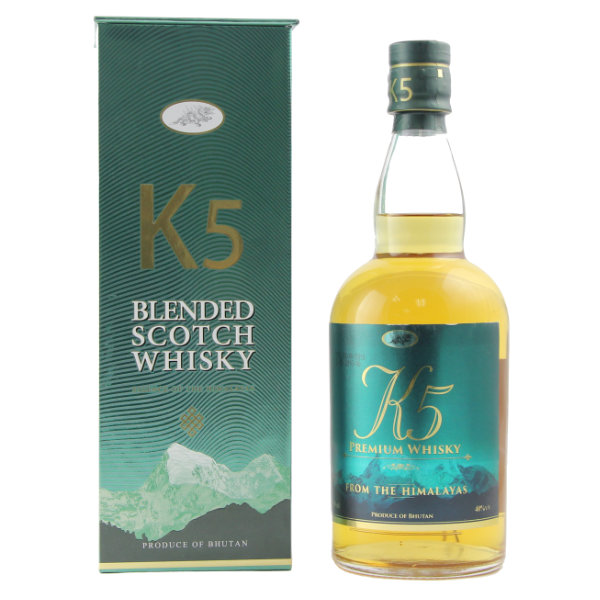
Named in honour of His Majesty the Fifth King. Blended and bottled at the Gelephu Distillery under the Bhutanese Army Welfare Project: 65% Scottish malt (8–12 year, ex-bourbon and sherry casks) blended with 35% Bhutanese organic grain spirit distilled with Himalayan glacial water.
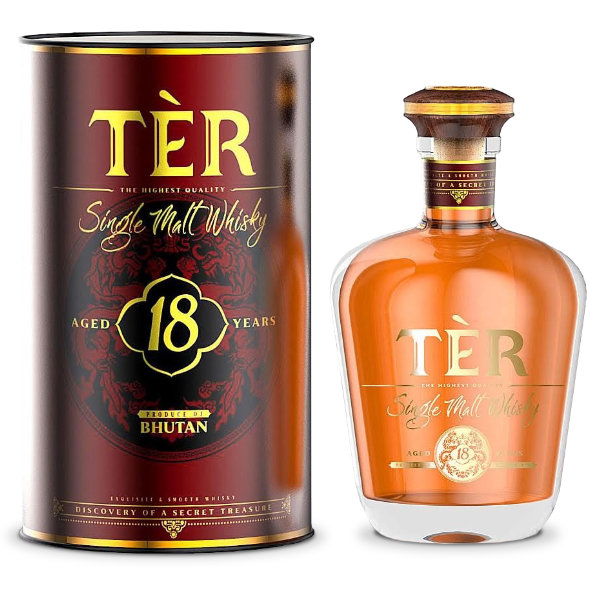
Tér means "treasure" in Dzongkha — and this 18-year aged single malt earns the name. Rare, exquisitely smooth, and released in 2019 in tiny quantities. One of the most collectable whiskies to emerge from South Asia. Often out of stock.
One of Bhutan's oldest commercial whiskies, first produced in 1983 and blended over four years with selected malt. Extremely popular locally — often out of stock in Thimphu shops. At around Nu 300 (~$6) it is exceptional value and a genuine local institution.
Bhutan's ancient homemade spirit, distilled or fermented from barley, rice, wheat, potatoes, or buckwheat depending on the region. Deeply embedded in Bhutanese hospitality — guests are typically offered Ara as a gesture of welcome. Not commercially bottled; try it at a village homestay.
"In Bhutan, a drink is never just a drink — it is a gesture of welcome, reverence, and belonging."— Bhutanese tradition
Bhutan produces a small but interesting range of wines — including a peach wine unique to the Himalayas.
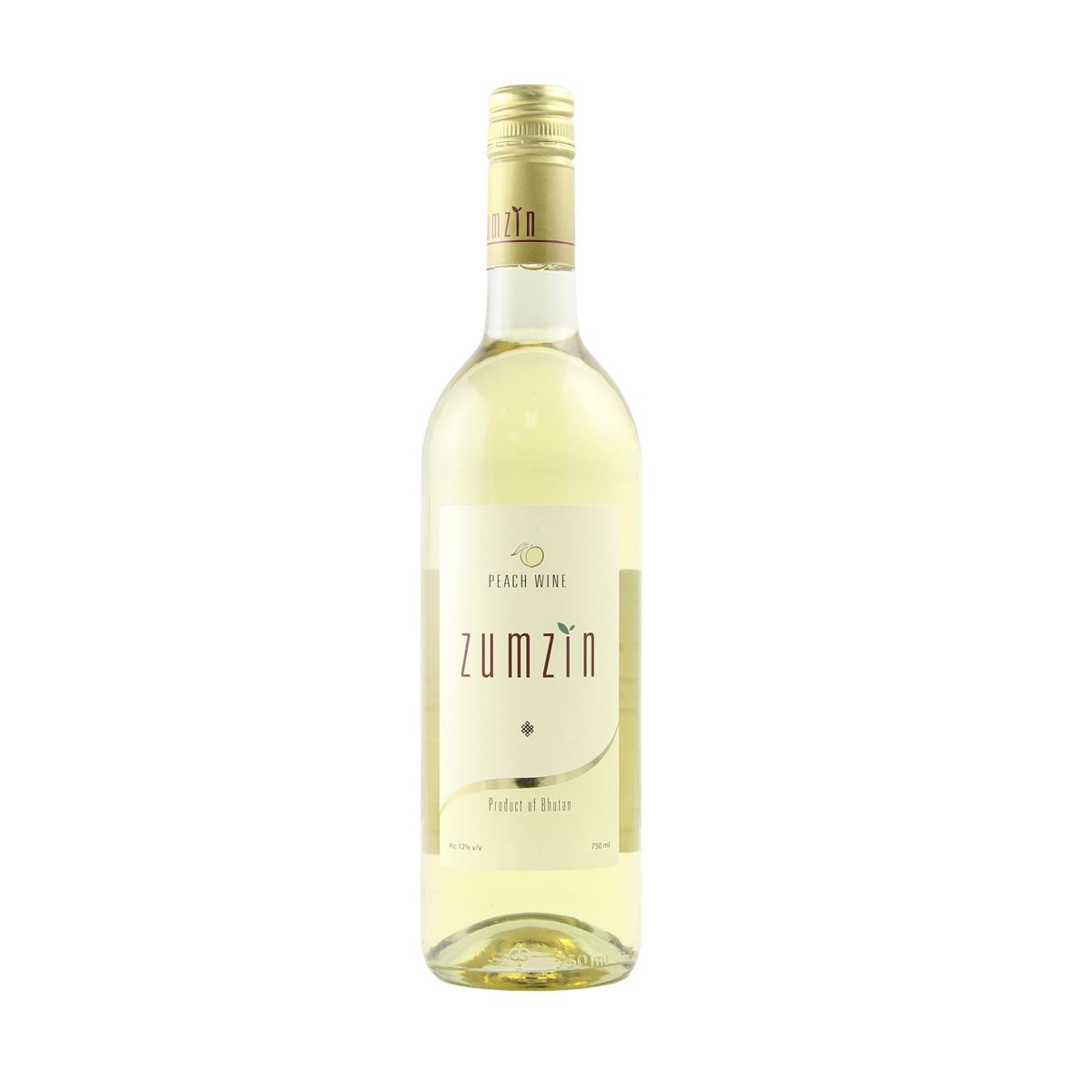
Made from natural, ripe Bhutanese peaches — this unique Himalayan fruit wine is fragrant, easy-drinking, and unlike anything you will find elsewhere. Works as an aperitif, with meals, or as a dessert wine. 700ml bottle.
Widely considered the best wine produced in Bhutan, made in collaboration with international wine experts. A dry Shiraz at 13.5% in a standard 750ml bottle. Priced at Nu 250 locally, it pairs well with Bhutanese red meat dishes and momos.
Named after Bhutan's national animal, the takin, this is an affordable and approachable local red wine with a noticeably sweet character. At Nu 100 (~$1.20) it is one of the most accessible Bhutanese-made wines and widely found in local shops.
Where Bhutan's drinks are actually made.
Bhutan's first microbrewery, linked to Swiss honorary citizen Fritz Maurer, who brought cheese-making and brewing to the Bumthang valley. It produces Red Panda in small batches. Visitors can usually tour the brewery and taste Red Panda at the source.
Products: Red Panda Weiss Beer
Commissioned in 2006 in the Pasakha industrial estate near Bhutan's southern border with India. The country's main commercial brewery and maker of the most widely-distributed Bhutanese beers.
Products: Druk 11000 Strong Lager, Druk Lager
Operated under the Bhutanese Army Welfare Project, this distillery is home to Bhutan's most celebrated spirits. It produces K5 Himalayan Whisky — the first whisky blended and bottled in Bhutan — along with other spirits including Special Courier and TER.
Products: K5 Whisky, TER Single Malt, Special Courier, Bhutan Grain Whisky
Bhutan's craft scene is nascent but stirring. A handful of Thimphu bars (Mojo Park, Old Factory, Drunken Yeti) now import craft beers and experiment with premium pours. As tourism grows, expect this to develop. We'll update this section as new players emerge.
Status: Emerging — check back for updates
From the capital's live music bars to remote festival grounds.
The capital has the best bar and restaurant scene, centered around Norzin Lam. Well-known spots include Mojo Park (live bands on weekends), The Alchemy Pub, Drunken Yeti (fills up fast, known for creative cocktails), and Old Factory (industrial-chic, craft focus). Hotel bars stock local and imported drinks.
Most visitors arrive via Paro's international airport. The town has several restaurants serving local beers and whisky alongside traditional Bhutanese food. A cold Druk after the dramatic mountain landing is practically a ritual among frequent visitors.
Make the journey to central Bhutan and visit Bumthang Brewery — the source of Red Panda beer. A USD 5 tour typically includes a tasting. The valley is also home to producers of traditional Ara spirit; a village homestay is the best way to experience it.
Bhutan's former capital and a popular stop on the tourist trail. Guesthouses and small restaurants serve beer and spirits here, though selection is more limited than Thimphu. The setting — between two rivers beneath a massive dzong — makes any drink taste better.
Bhutan's Tsechus (religious festivals) are the best places to try Chang and Ara alongside locals. The Paro Tsechu (spring) and Thimphu Tsechu (autumn) are the most accessible for visitors and draw huge local crowds.
K5 Whisky and Zumzin peach wine are the best souvenirs. Look for them in Thimphu duty-free and larger shops. Check your airline's duty-free allowance — most permit 1–2 bottles of spirits and wine for personal import.
Everything you need to know to get there and drink well.
Most nationalities apply for an e-visa via a licensed tour operator, and pay a Sustainable Development Fee of USD 100 per person, per night (fixed at this rate through August 2027). Indian nationals enter on a permit; Bangladeshi and Maldivian nationals can get a visa on arrival. Always confirm current rules before booking.
Official Visa Info →Spring (March–May) and Autumn (September–November) offer the best weather and coincide with the major Tsechu festivals — prime time for drinks and culture. Monsoon (June–August) brings rain but fewer tourists and lower demand for guesthouses.
Drukair and Bhutan Airlines operate the only commercial flights into Paro International Airport. Routes connect via Delhi, Kolkata, Bangkok, Singapore, and Kathmandu. The mountain approach to Paro is one of the world's most spectacular — and nerve-wracking — landings.
Drukair →Local beer is very affordable: a 650ml Druk costs roughly BTN 75–85 in a shop (~$1). K5 Whisky runs around Nu 1,500–2,000 locally. Zumzin peach wine is around Nu 350–450. Hotel and tourist bars charge a premium but rarely exceed USD 8 for a drink.
Bhutan requires travel through a licensed tour operator. Start with the official Department of Tourism site to find an authorised operator.
Yes. Bhutan has no alcohol prohibition. Beer, whisky, wine, and spirits are freely available in restaurants, bars, and shops throughout the country. Bhutan produces its own whiskies (K5, TER, Special Courier), wines (Zumzin, Vintria), traditional spirits (Ara), and beers (Druk 11000, Red Panda). The country has introduced strict tobacco bans but alcohol remains unrestricted.
Druk 11000 is the most widely available — a strong lager at 8% ABV brewed in Pasakha, found everywhere from Thimphu restaurants to roadside shops. Red Panda, an unfiltered Hefeweizen from the Bumthang microbrewery, is rarer but widely regarded as the craft highlight and worth seeking out if you travel to central Bhutan.
K5 Himalayan Whisky (blended, 48.2%, bottled in Gelephu) is the most famous and accessible — named after the 5th King and produced under the Army Welfare Project. TER is an 18-year aged single malt released in 2019, rare and priced around $315 internationally. Special Courier (since 1983) is the popular everyday local blended whisky at around Nu 300.
Yes. Zumzin is a unique Bhutanese peach wine (12% ABV, 700ml), pleasant and fruit-forward. Vintria Shiraz (13.5%, 750ml) is considered the best local wine — a dry red made with international expertise. Takin Red Wine is a sweeter, more affordable option at Nu 100. Imported wines are also widely available in Thimphu restaurants and hotels.
Ara is Bhutan's traditional homemade spirit, distilled or fermented from barley, rice, wheat, potatoes, or buckwheat depending on the region and season. It is deeply embedded in Bhutanese hospitality — guests are typically offered Ara as a gesture of welcome and goodwill. It is not commercially bottled in any significant way; the best place to try it is at a village homestay or during a festival.
Chang (also spelled Chhaang) is a traditional fermented grain beer made from rice, maize, or millet, common across the Himalayan region including Bhutan. It is brewed at home and served at festivals and community gatherings — mildly alcoholic, slightly sour, and usually drunk warm from a bamboo vessel. It is a very different experience from commercial beer and one worth seeking out at a local festival.
Yes, within your home country's customs limits. K5 Whisky and Zumzin peach wine are excellent choices to bring home. They are available at larger shops in Thimphu and duty-free at Paro airport. Check your airline and destination country's duty-free allowance (typically 1 litre of spirits or 2 litres of wine).